Showing posts with label 1840. Show all posts

Dec 11, 2011

1840s Men's Coats

Now that I've made myself an 1840s gown I need to research an 1840s outfit for my husband.

Scanned in from a personal copy of The Godeys Ladys Book, 1840s 


In the late 18th century the woollen tailcoat was a fashionable garment worn by men in Europe and America. Woollen cloth was easy to manipulate with stitching and pressing helping to mould the garment to the wearer's shape.

Only part of the tailcoat was lined in the early 19th century.

R.I. Davis (1994). Men's Garments 1830-1900. 2nd ed. California, USA: Players Press, Inc.. x.
During the second half of the 19th century the supply of different types of woollen fabric meant that in many cases the raw edges had to be turned in. The raw edges that dominated in the early 19th century tailcoats was now only seen in the heavier topcoats and lining was used throughout.

I would thoroughly recommend trying to find R.I. Davis (1994). Men's Garments 1830-1900. 2nd ed. California, USA: Players Press, Inc. The two pages I've copied below are only part of their instructions on making an 1840s Double-breasted dress coat, 1840, and the seven page article has copious instructions on all the measurements to take, as well as close-up patterns for the sleeves, collar and lapel.

R.I. Davis (1994). Men's Garments 1830-1900. 2nd ed. California, USA: Players Press, Inc.. 23.

R.I. Davis (1994). Men's Garments 1830-1900. 2nd ed. California, USA: Players Press, Inc.. 24.


Tidens Toj has an 1840s coat on their website.


Oct 23, 2011

1840s Dance Display 22 October 2011

Yesterday we wore our 1840s dresses, and those who hadn't joined the busy sewing projects wore their regency gowns. The weather was very hot and sunny - its been a cool Spring so far so some of us were caught unawares. For the first time I was NOT sunburnt, but the heat took its toll on me.


If you would like to join our dance classes or book us to do a dance display at your next event, contact us on garden@earthlydelights.com.au or call us on (02) 6281-1098.

Oct 19, 2011

1840s Day Dress

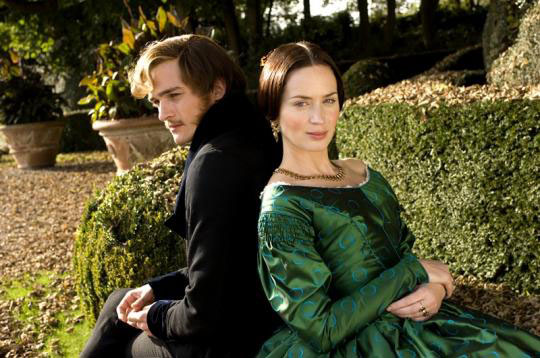
Last night I started working on my 1840s day dress. It will be made from an Ikea duvet cover that I adore - its a wonderful floral pattern that I've already seen a few historical costumers use for gowns. I've chosen to make my sleeves like the green gown in Young Victoria, except that I'm still deciding on whether to gather or pleat them at the top.

Gathered sleeve

Pleated Sleeve

For the bodice I'm thinking about making a fitted front with reveres, narrow at the waist and widening out to the shoulders, like below.
MFA Boston
My fabric, a cotton Ikea duvet cover
As soon as I cut out my pattern pieces I use the remnants on the bias to prepare the piping. 
Each pattern piece is interlined with cotton organdy. This provides support for a structured bodice.  As I'm working in a hurry and don't plan to line the bodice,  I've overlocked the edges with white thread.
Reveres completed - interlined and lined with cotton organdy for stability.  Piped along the outside edge. These will be attached between the centre and side front bodice pieces.
Front of bodice, with revere attached. I have piped the vertical seams of the front feature.
Bodice complete, now for the sleeves.

Hand pleating the top of the sleeves. Make sure you use glass headed pins.
First row of sleeve ruffles attached. 
Top of sleeve is backed with cotton organdy. Sleeve ruffles are sewn through both layers.

Two rows of sleeve ruffles.

Sleeve pinned in place to see how it looks. Next to gather bottom sleeve into a cuff.
Better photo - taken at night. 
I've just spent some time re-doing the sleeves. I was not happy with how they sat with pleating at the top, plus the ruffles were not meeting up. Next time, add the ruffles after the sleeve is made. In the meantime I cut off the top of the sleeve, added a new sleeve cap and then 11.5cm deep cuffs. When I pinned the sleeve together this time the ruffles all lined up. Phew!

Starching petticoats. I would have preferred to put them around a large cylinder (like a large plastic garbage bin) but this was the closest I could find. Will just have to iron them with my heavy duty professional steam iron before they are completely dry.


Patterns that I'm using:
Bodice - 1840s German Dress from Truly Victorian
Sleeves - Figleaf Patterns 1857 Day Dress & Jean Hunnisett
Skirt - 1840s German Dress from Truly Victorian

Jun 5, 2011

1840s Gentleman's Nightcap Knitting Pattern

Franklin Habit has taken an 1840s nightcap pattern and translated it into modern knitting terms at http://www.knitty.com/ISSUEfall08/FEATfall08SIT.html


The “gentleman’s night cap” is included in the knitting chapter of The Workwoman’s Guide, first published in 1838. The anonymous author, who signed herself “A Lady,” introduces it thus:
This cap has a very pretty appearance, something resembling old-fashioned insertion lace,
as there is an ornamented border round the head. It is done with fine needles and cotton,
and knit round like a stocking.
Knitting Needle Size: 1 or 2.25 mm

Yarn Weight: (1) Super Fine (27-32 stitches to 4 inches)
Circumference: 22 inches at opening.
Depth: 11.5 inches from edging to peak.
Standard Abbreviations used in the pattern are explained here.


May 10, 2011

c. 1840's Ivory Figured Silk Two-Piece Gown

c. 1840's Ivory Figured Silk Two-Piece Gown with Provenance from the Farnsworth Estate of Massachusetts


From the family of Amos Farnsworth Jr., son of Amos Farnsworth who fought in the battle of Bunker Hill, and whose diary is displayed at the Mass Historical Society. 
The bodice is closely fitted and boned, forming deep "v" below waist, and lacing up the back with self standing collar trimmed with purple ribbons and lace.  The sweet puffed sleeves have long net undersleeves attached ending in net ruffles and trimmed with purple ribbon bows.  The skirt is pleated into waistband and tightly gathered at center back, with deep pocket on right side.  Glazed cotton bodice lining is stamped with attractive "Grass Bleach" with harp logo. Interesting pocket in the skirt and tiny pocket off the bodice waist.
Measures:  30/31" bust (with the lace-up "corset" back), 23/24" bodice waist, 26" skirt waist (larger than the bodice as she would have worn petticoats under which would take up waist room), 42" long from waist to hem.  Excellent condition with just some brown residue in lining (see photo) and minor holes in netting of one sleeve (largest size of double eraser head)... oh, and one brass aglet is missing from one end of the original lacing. 

Jane Eyre - copies of 1840s gowns on the screen

I have somehow skipped making 1840s costumes. I've made many gowns from many eras, but not this one. The new movie, Jane Eyre, has inspired me, together with a dance performance we have scheduled for 22 October 2011 at the St Johns Church Spring Fair. The foundation stone for the Anglican Church of St John the Baptist in Reid was laid on 11 May 1841 and the church building was completed in May 1844.
If you wish to attend the performance in October or even join our dance display group, see us on facebook.
Below are a few screen captures from Jane Eyre for costume study. In other parts of this blog I am sharing close-up pictures of antique garments with you so you can see construction methods.

May 8, 2011

Antique 1840s skirt

It always amazes me how small and dainty the hand stitching is on early period dresses. It reminds me of an early primary school teacher who, along with my mother and nana, inspired me to have very neat handwriting. Now I have these garments to inspire me with my stitching.
Many of the pictures below are of the inside of the garment - where most of the action is, and where we often do not get an opportunity to see close-up.
You may notice when looking at the skirt that it is hemmed first, then raised it up to the waist to the right length and then turned over at the top over to do the cartridge pleating. I first saw this method described in Jean Hunnisett's Period Costume for Stage & Screen, 1800-1909.
You can see the matching bodice here. A limited-attendance workshop is planned for early 2012 - you'll get to see this garment up-close and make a reproduction for yourself. Send your expressions of interest to Aylwen.


May 6, 2011

Sharing an Antique 1840s bodice in Aylwen's collection

Tonight I was checking my costume collection and thought I'd share this 1840s bodice with you. Its one of my favourites, and one that I'd love to replicate one day when I find the "right" fabric and when my weight loss stabilises. I'll take photos of the skirt another day, but in the meantime, here is the bodice. 
You can read about the matching skirt here. A limited-attendance workshop is planned for early 2012 - you'll get to see this garment up-close and make a reproduction for yourself. Send your expressions of interest to Aylwen.


$0 Web Hosting

Total Page Views